8 Summer tips for Cardiovascular Health
Summer temperatures can be great for outdoor leisure activities, but can take a real toll on our bodies if we engage in more vigorous physical activity. This is especially true for individuals with cardiovascular medical conditions such as Coronary Artery Disease (CAD), as the combination of physical exertion with the body’s diminished thermoregulatory capability can have adverse effects on overall health.
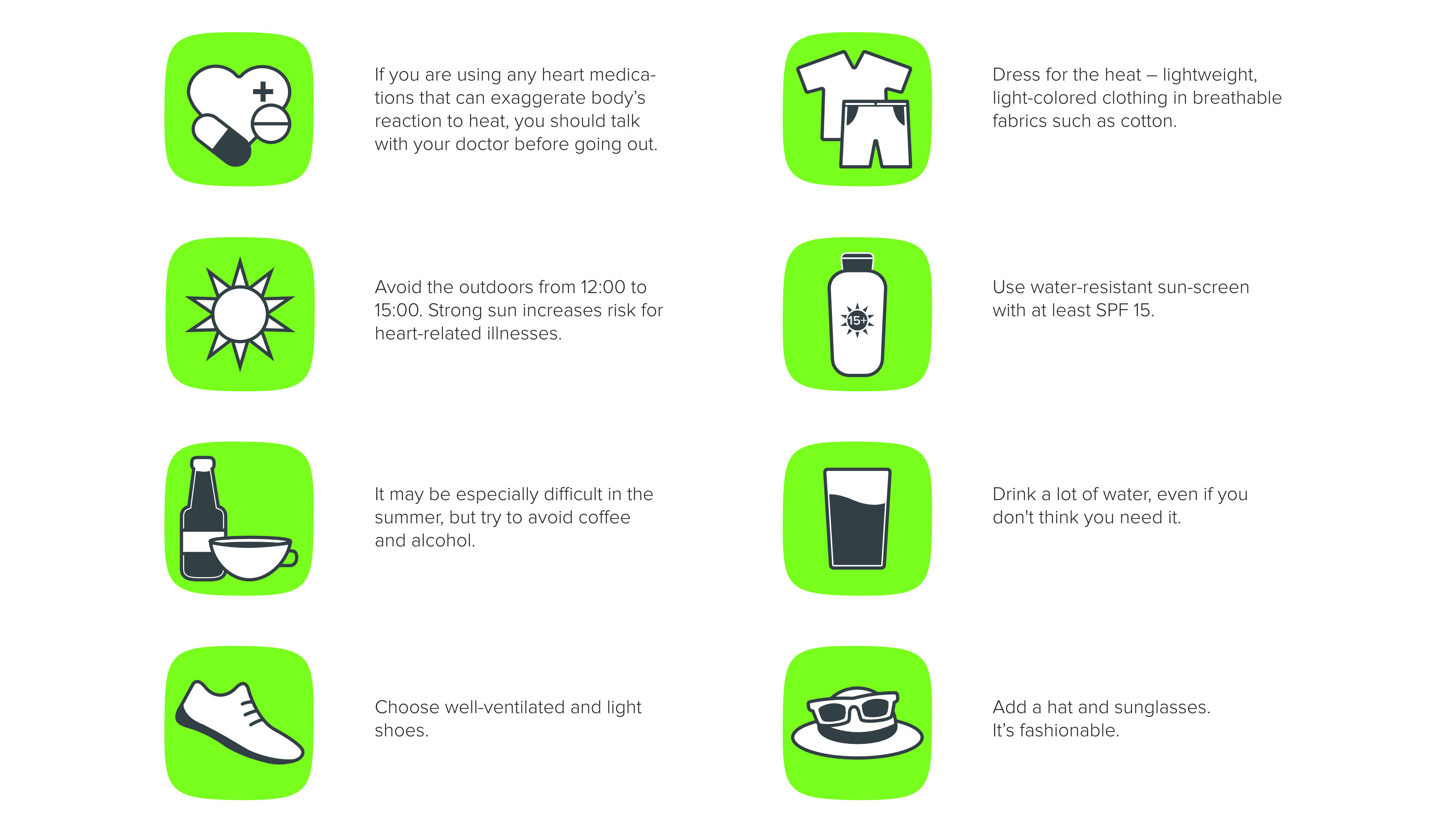
How heat affects the heart?
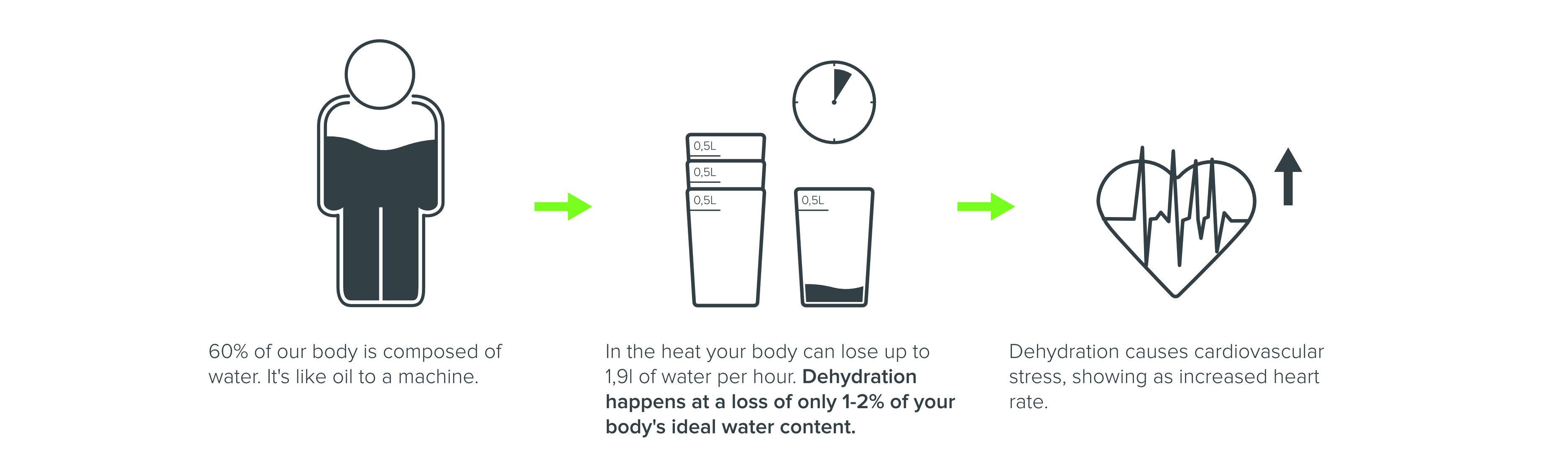
Symptoms of heat exhaustion
Headaches,
heavy sweating,
cold, moist skin, chills,
dizziness or fainting (syncope),
a weak and rapid pulse,
muscle cramps,
fast, shallow breathing,
nausea, vomiting or both.
Symptoms of heat stroke
Warm, dry skin with no sweating,
strong and rapid pulse,
confusion and / or unconsciousness,
high fever,
throbbing headaches,
nausea, vomiting or both.
Be especially careful
1. Overweight individual
Overweight individuals are more vulnerable to cardiovascular complications, therefore they should be extra careful in the heat.
2. In the car
A car can reach 40 ºC when temperatures are only around 15 ºC. Heat exhaustion can take place when the outside temperature is as low as 13 ºC.
3. Elderly & Children
Elderly and children are especially prone to heat exhaustion because their bodies can’t adjust to sudden changes in temperature so well.
